
Bringing Policymaking to Life: SPIA 2025-2026
Wendy McWeeny and Raquel Mazon Jeffers were delighted to return to Princeton’s School of Public and International Affairs this year as part of the teaching team for the school’s Policy and Advocacy Clinic.
This is the third year the CHAP Co-Directors have helped bring policymaking to life as part of the university’s SPIA in New Jersey faculty. Students in the 2025-2026 cohort explored two areas with promising potential for New Jersey’s public health landscape: Community Health Workers and Unconditional Cash Transfers. The course culminated with presentations to key state stakeholders.
Community Health Work is holistic—and Community Health Workers are expert system navigators and trusted community liaisons.
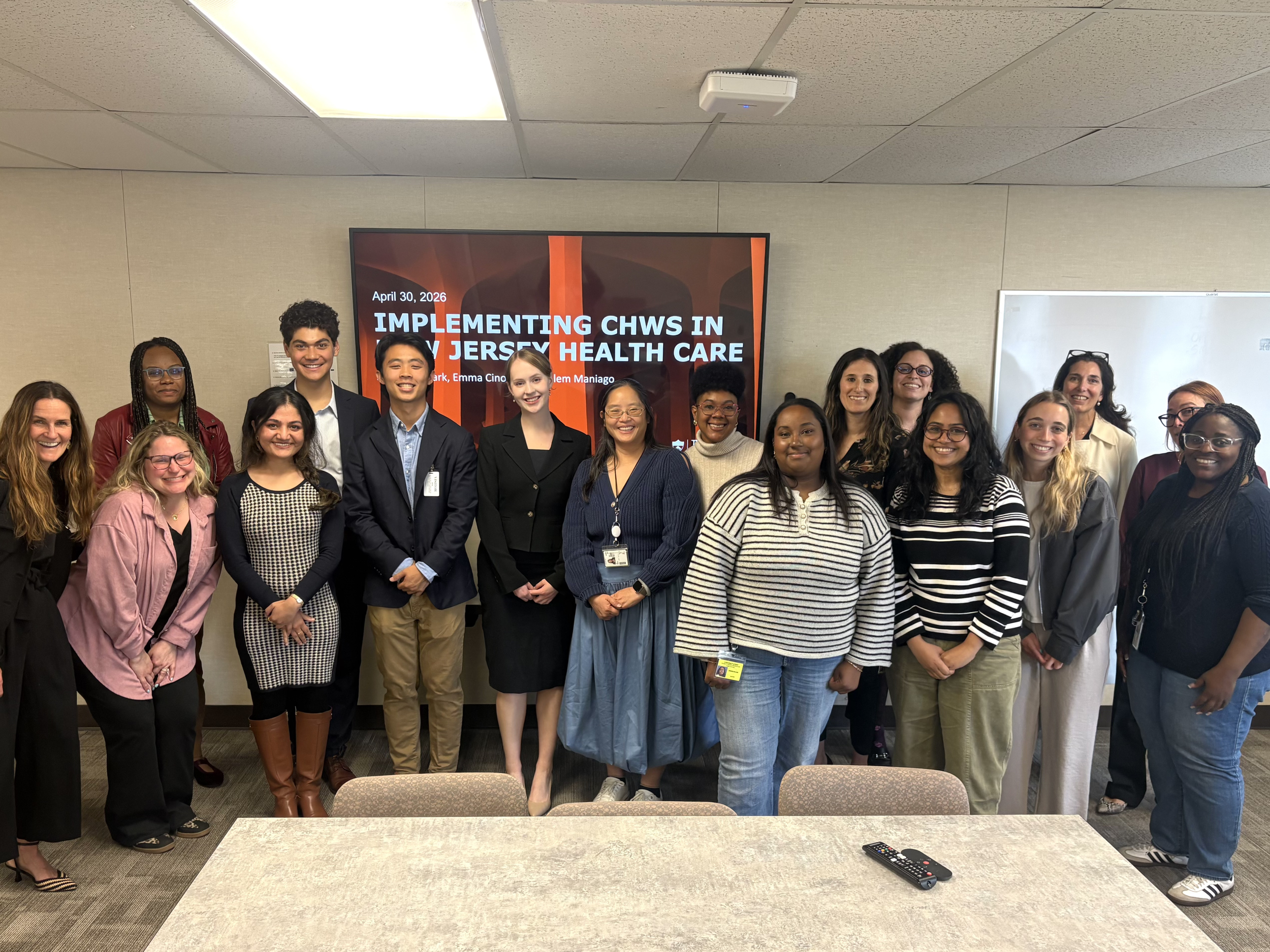
Undergraduates Caleb Park, Emma Cinocca, and Willem Maniago spent the semester exploring the current and potential impact of Community Health Workers (CHWs) on chronic disease, perinatal health, and Medicaid enrollment and eligibility challenges in New Jersey.
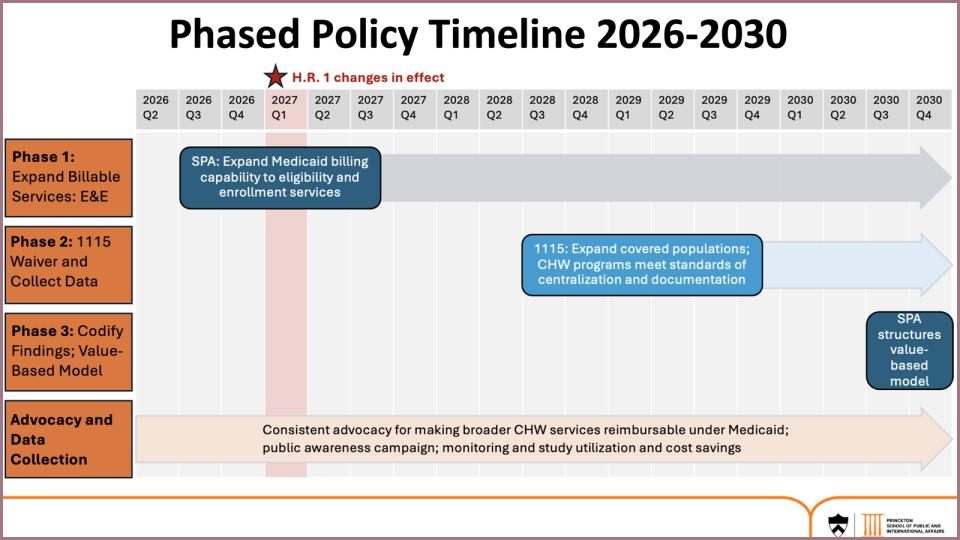
On Thursday, April 30th, the group presented their research and findings to colleagues from the NJ Division of Medical Assistance and Health Services, sharing recommendations for a three-phased approach to expanding and financing CHW programs and restructuring payment models, through State Plan Amendments and 1115 Waiver expansions that would support increases to CHWs’ Medicaid billing capabilities and the covered populations they could serve, and eventually leading to a structured, value-based payment model.
Implementing CHWs in New Jersey Health Care, C. Park, E. Cinocca, W. Maniago
Unconditional Cash Transfers generate positive health and financial effects — and more money means better results.
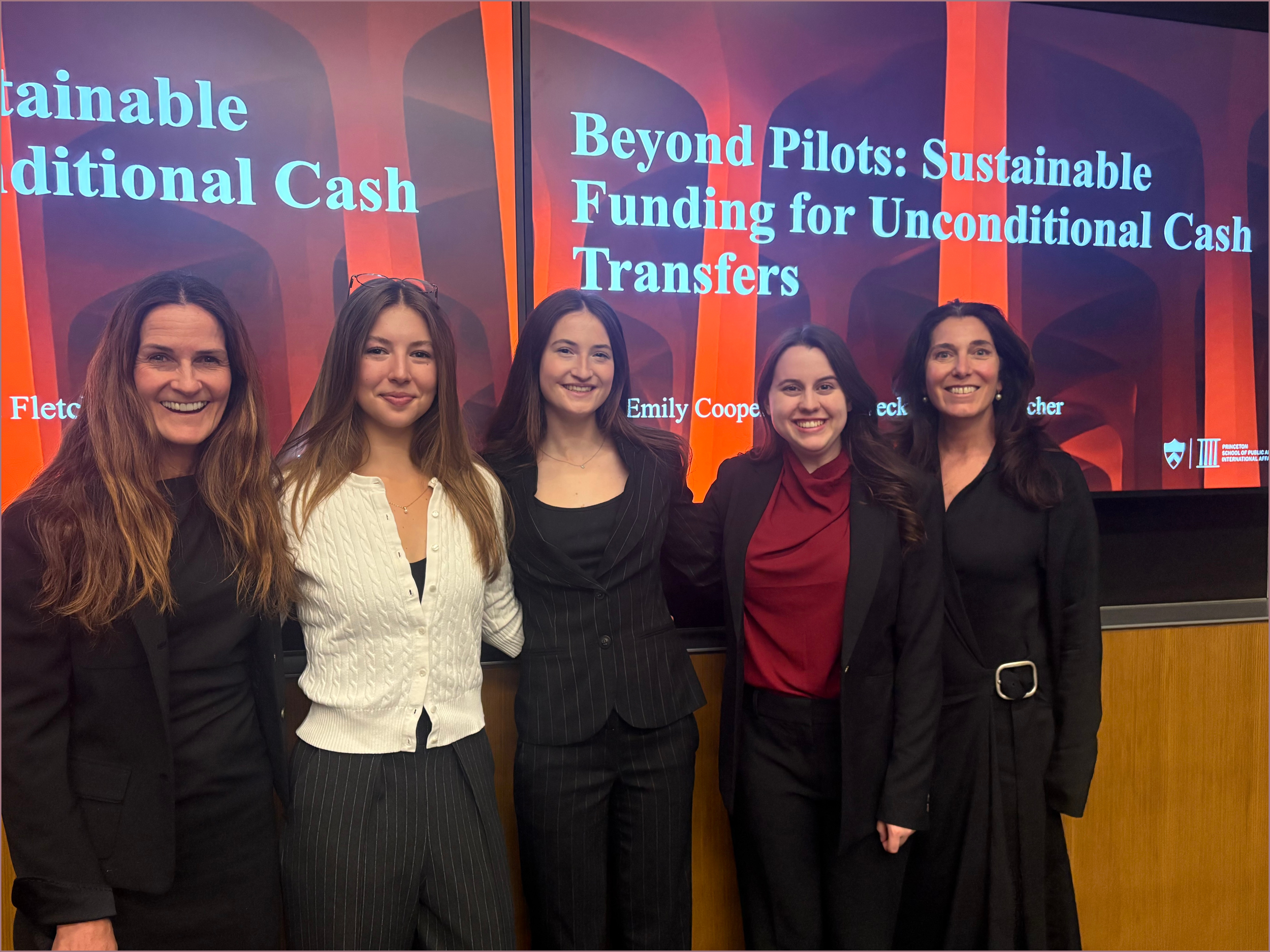
On Friday, May 1st, students Emily Cooper, Laurel Jarecki, and Sophia Fletcher, whose research focused on sustainable funding for Unconditional Cash Transfers (direct, “no strings” payments) for new mothers and infants in New Jersey, presented their findings and recommendations to advocates and policy makers, including colleagues from The Bridge Project and New Jersey Maternal and Infant Health Authority.
Considering the state’s current maternal health outcomes, the impact of financial instability during the perinatal period, and the history of basic assistance and social supports in NJ, the team examined the benefits of UCT programs on women and families’ financial stress, housing, and healthcare.
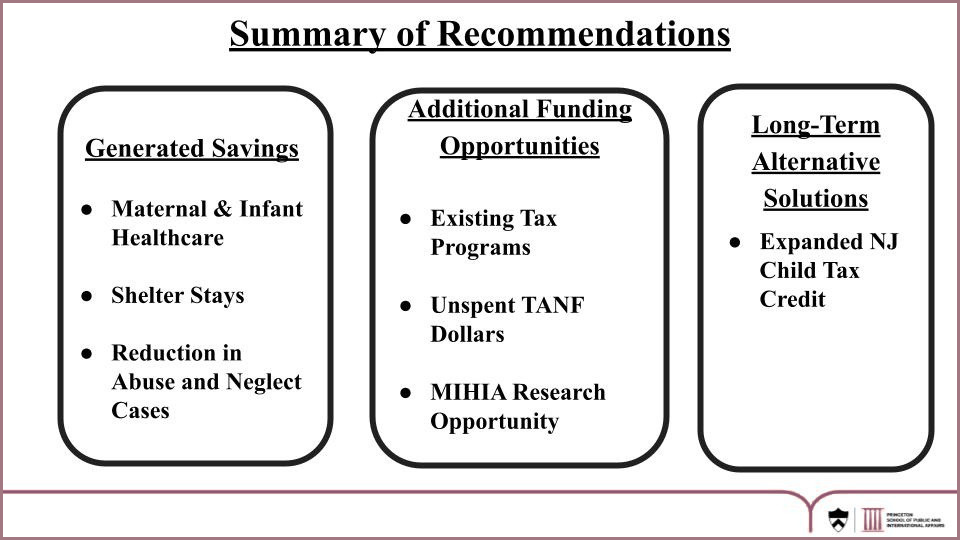
Recommendations included a phased approach to expanding the availability of UCTs and sustaining them through public funding, with a long-term goal of implementing a statewide UCT program that would offer a cost-effective, preventive strategy to address inequities and promote economic stability for New Jersey families.
Beyond Pilots: Sustainable Funding for Unconditional Cash Transfers, E. Cooper, L. Jarecki, S. Fletcher.
Thank you to our colleagues SPIA and all of this year’s students — who brought so much light to days that were often darker. It’s a true joy to be able to work with the next generation of public health and policy leaders.
And to the partners and supporters who both added depth to and carefully considered the students’ research and recommendations, we are grateful for your engagement and look forward to continuing to find ways to advance enduring systems of health and care together.